
Why Stablecoins Are Growing in Latin America
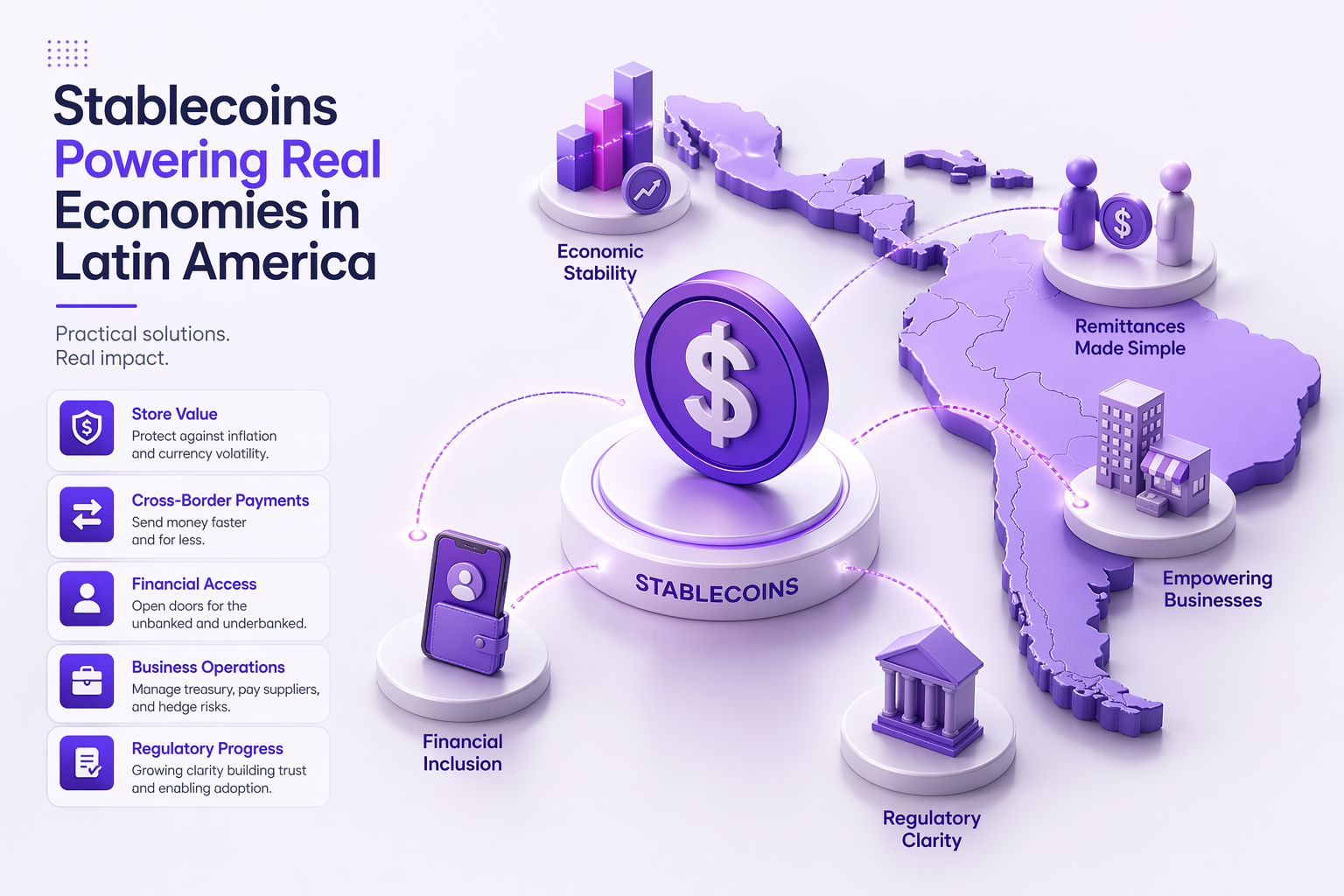

Stablecoins have become one of the fastest-growing segments of digital asset markets in Latin America, not because of speculation, but because they solve real, everyday financial challenges. In a region where currency volatility, inflation, and limited access to global financial systems are common, stablecoins offer a practical alternative for storing value, moving money, and participating in a more connected financial economy.
One of the main drivers of adoption is currency instability. In several Latin American countries, local currencies have experienced periods of high inflation or sharp devaluation, making it difficult for individuals and businesses to preserve purchasing power. Stablecoins, particularly those pegged to more stable currencies like the U.S. dollar, provide a way to hold value in a form that is less exposed to local economic fluctuations. For many users, this is not about investment returns, but about maintaining financial stability in uncertain environments.
Cross-border payments are another major factor. Latin America has strong economic ties across borders, including remittances from abroad and regional trade. Traditional international transfers can be slow and expensive, often involving multiple intermediaries and fees. Stablecoins enable near-instant transfers at significantly lower costs, allowing individuals to send money to family members or businesses to settle payments more efficiently. This has made them especially useful in corridors where remittance flows are high.
Access to financial services also plays a key role. A significant portion of the population in parts of Latin America remains underbanked or unbanked, limiting access to savings accounts, credit, and international payment systems. Stablecoins, accessed through digital wallets, provide an alternative entry point into financial systems without requiring traditional banking relationships. This lowers barriers to participation and allows more people to engage in digital commerce and global markets.
For businesses, stablecoins are increasingly being used for operational purposes. Companies can use them to manage treasury functions, pay international suppliers, or hedge against local currency risk. In environments where banking infrastructure may be slow or restrictive, stablecoins offer a more flexible way to manage cash flow and conduct cross-border transactions. This utility-driven usage is helping shift the perception of crypto from a speculative asset to a functional financial tool.
Regulatory developments are also shaping growth. Across Latin America, governments and regulators are beginning to define how digital assets, including stablecoins, fit within existing financial systems. While approaches vary by country, there is a growing recognition that stablecoins can play a role in improving payment systems and expanding financial access. As regulatory clarity improves, it can provide greater confidence for both users and institutions to engage with these technologies.
It is important to note that stablecoin adoption is not without challenges. Questions around regulatory treatment, issuer transparency, and systemic risk remain important considerations. Additionally, access to stablecoins often depends on digital literacy, internet connectivity, and platform reliability. Despite these factors, the underlying demand driven by real-world use cases continues to support their growth.
The rise of stablecoins in Latin America reflects a broader shift from speculative use toward practical utility. They are being adopted not because they are new or novel, but because they address gaps in existing financial infrastructure. As these use cases continue to expand, stablecoins are likely to play an increasingly important role in how value is stored, transferred, and managed across the region.