
What Smart Contracts Actually Do
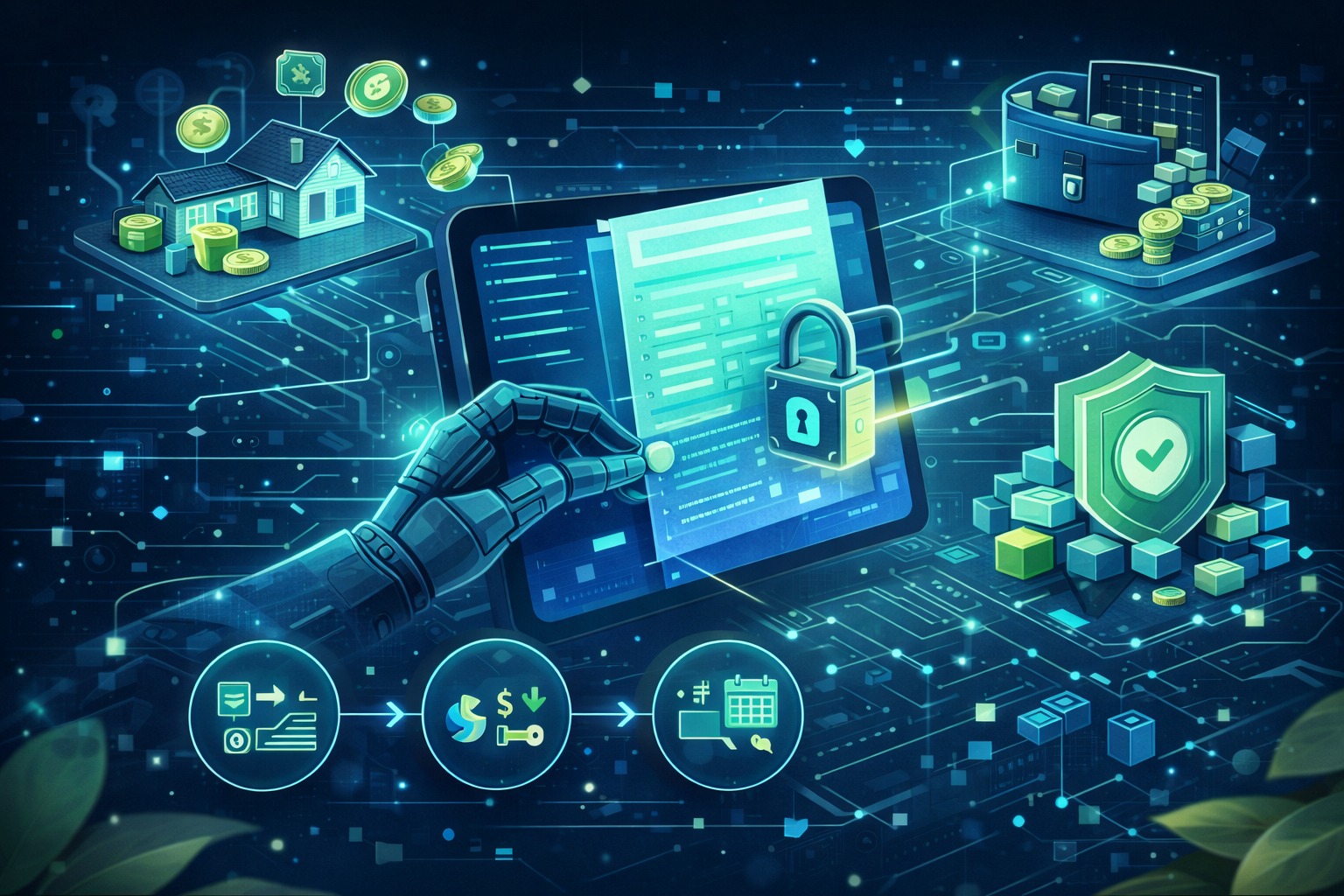

Smart contracts are self-executing programs on blockchains that automatically enforce rules, transfer value, and update ownership when predefined conditions are met, without relying on intermediaries. By running transparently and identically across many computers, they provide trust through code, ensuring actions happen exactly as agreed and are permanently recorded. These contracts make tokenization and fractional ownership possible by defining what digital tokens represent, tracking precise ownership shares, automating income distribution, and enabling fast, accurate transfers. Together, they transform ownership and agreements into efficient, programmable systems suited for modern digital assets and real-world use.
What Is A Smart Contract?
Smart contracts are self-executing pieces of code that automatically carry out predefined actions when specific conditions are met. Instead of relying on people, paperwork, or manual approval processes, smart contracts enforce rules directly through software. Once deployed on a blockchain, they operate exactly as written, executing transactions such as transfers, payments, or access rights without requiring trust in a central authority or intermediary.
Smart contracts replace conditional logic that would normally be handled by lawyers, administrators, or systems operators. For example, a smart contract can be programmed to release funds only after certain requirements are satisfied, such as receiving payment, reaching a deadline, or verifying ownership. Because the logic is transparent and stored on an immutable ledger, all parties can see the rules in advance and verify that they will be enforced consistently.
Smart contracts also reduce friction and costs by automating processes that traditionally involve multiple intermediaries. Tasks like distributing revenue, updating ownership records, or enforcing compliance rules can happen instantly and automatically. This reduces delays, lowers administrative overhead, and minimizes human error, making transactions faster and more reliable across borders and jurisdictions.
Smart contracts enable new forms of programmable ownership and coordination. Assets can carry built-in rules that govern how they are transferred, shared, or monetized over time. This allows for complex arrangements, such as fractional ownership, automated profit sharing, or conditional access, to operate seamlessly within digital systems. By embedding logic directly into assets, smart contracts turn ownership and agreements into living systems that can adapt to modern, digital economic activity.
How Do Smart Contracts Operate Autonomously?
A smart contract is just a set of instructions stored on a blockchain that runs automatically when someone uses it. Think of it like a digital vending machine. Once it is set up, everyone can see the rules, and it follows those rules exactly every time. When a person interacts with a smart contract, they send a request to it, and the contract checks what was sent and decides what to do based on its built-in instructions.
When someone uses a smart contract, thousands of computers around the world check the same instructions at the same time. Each computer runs the contract in the same way and makes sure the result is correct. Because all of these computers must agree on what happens, no single person or company can secretly change the outcome. This shared checking is what makes smart contracts trustworthy, even though there is no central authority in charge.
Inside a smart contract are simple “if this, then that” rules. For example, it might say: if the payment is received, then transfer ownership; if a deadline has passed, then release funds; or if the rules are not met, then do nothing. These rules are enforced automatically, without needing a human to approve or deny anything. If the conditions are met, the contract acts. If they are not, nothing happens, and the system stays the same.
Security comes from digital signatures and shared records. Only someone with the correct digital key can interact with a smart contract in a way that affects it, proving they are allowed to do so. Once the contract completes an action, the result is written permanently into the blockchain’s record. Because that record cannot be changed later, everyone can trust that the contract did exactly what it was programmed to do, no more and no less.
How Do Smart Contracts Enable Tokenization & Fractional Ownership?
Smart contracts enable tokenization by acting as the digital rulebook that defines what a token represents and how it behaves. When an asset like real estate is tokenized, a smart contract creates digital tokens that stand for ownership or economic rights tied to that asset. The contract specifies how many tokens exist, what each token represents, and who owns them. Because these rules are written into the blockchain, they are visible, consistent, and enforced automatically without relying on manual record-keeping or intermediaries.
For fractional ownership, smart contracts make it possible to divide a single asset into many smaller, clearly defined pieces. Instead of one owner holding everything, the smart contract tracks how much of the asset each person owns through tokens. Each token represents a fraction of the asset’s value or income rights. The contract ensures that ownership percentages always add up correctly and that transfers of fractions happen accurately, removing confusion about who owns what at any given time.
Smart contracts also automate how value flows to fractional owners. If a tokenized property earns rental income or generates returns, the smart contract can distribute payments automatically to all token holders based on their share. This happens according to pre-set rules, without needing a company to manually calculate or send payments. Automation reduces delays, lowers costs, and ensures that every participant is treated fairly according to the same transparent logic.
Smart contracts make fractional ownership easier to trade and manage. When someone wants to sell their fraction, the contract can handle the transfer instantly once the conditions are met, updating ownership records in real time. Compliance rules, limits, or eligibility checks can also be built into the contract itself. Together, this allows tokenized, fractional assets to be owned, shared, and exchanged more efficiently than traditional systems, while maintaining clarity, trust, and accuracy for everyone involved.