
What Happens When a Platform Operates Without Regulatory Approval?
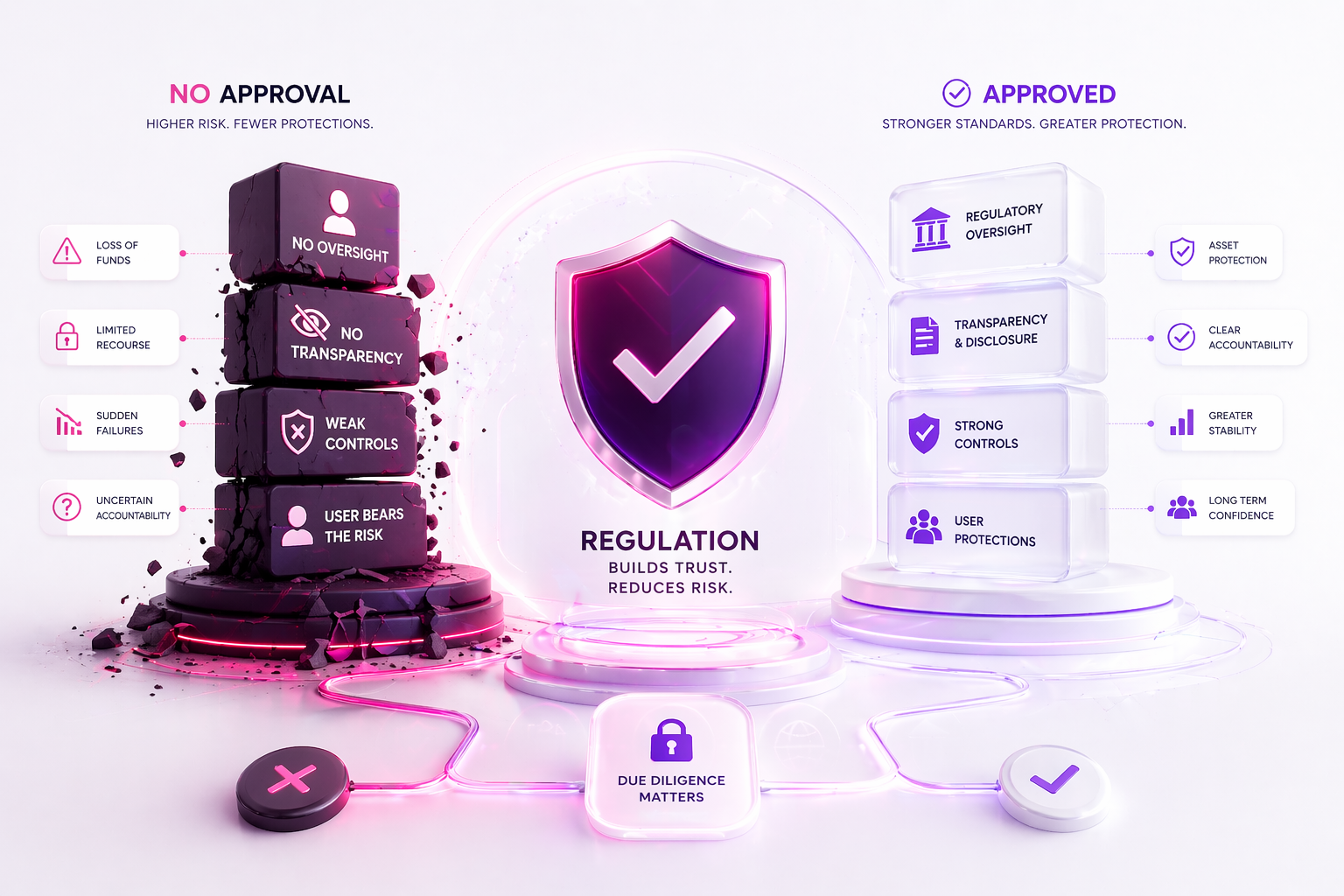

In digital asset markets, platforms often position themselves as neutral infrastructure, tools that simply enable trading, custody, or access to new opportunities. But when these platforms operate without regulatory approval or outside established compliance frameworks, the risks shift significantly onto users. What may initially feel like speed, flexibility, or fewer restrictions can, in practice, translate into weaker safeguards, limited accountability, and greater exposure to loss when things go wrong.
At a basic level, regulatory approval is not just about licensing, it is about standards. Approved platforms are typically required to implement controls around custody, risk management, disclosures, and operational integrity. They may be subject to audits, capital requirements, and ongoing supervision. When a platform operates without these frameworks, there is often no clear requirement to separate customer funds, no standardized reporting, and no external oversight ensuring that the platform is operating as described. This creates an environment where users must rely almost entirely on trust rather than verifiable structure.
One of the most visible consequences of operating without adequate oversight has been the failure of major crypto platforms that lacked robust governance and transparency. The collapse of FTX is a widely cited example. The platform grew rapidly, offering a range of services to global users, but later reports revealed significant issues related to internal controls, fund management, and governance. When the platform failed, many users were unable to access their assets, highlighting how the absence of clear safeguards and oversight can translate into direct financial harm.
Another example is QuadrigaCX, where the reported loss of access to private keys following the founder’s death left users unable to withdraw funds. The situation raised broader concerns about custody practices, internal controls, and the risks of centralized platforms operating without sufficient transparency or redundancy. In this case, the lack of regulatory structure meant there were limited protections or recovery mechanisms available to affected users.
Even in cases where platforms do not collapse outright, operating without regulatory alignment can create ongoing risks. Users may face sudden changes in withdrawal policies, unexpected freezes on accounts, or limited recourse in the event of disputes. Without regulatory frameworks, there may be no clear process for handling customer complaints, no mandated disclosures about how assets are managed, and no assurance that the platform maintains sufficient reserves or security practices. This uncertainty can undermine confidence and make it difficult for users to assess the true risk of participation.
Regulatory approval also plays a critical role in defining legal accountability. When a platform operates within a regulated environment, there are typically clear legal obligations regarding how customer assets must be handled and what disclosures must be made. If those obligations are not met, there are mechanisms for enforcement. In unregulated or loosely regulated environments, accountability is often less defined, particularly when platforms operate across multiple jurisdictions. This can make it challenging for users to seek remedies or even understand which laws apply.
It is important to recognize that regulation does not eliminate risk. Markets can still be volatile, technologies can still fail, and platforms can still face operational challenges. However, regulatory frameworks are designed to reduce certain categories of risk, particularly those related to fraud, mismanagement, and lack of transparency. They establish baseline expectations for how platforms should operate and provide users with clearer information about what they are engaging with.
The broader implication is that the absence of regulation does not simply mean fewer rules, it often means fewer protections. For users, this shifts the burden of due diligence and risk assessment significantly. Understanding how a platform is structured, how it manages assets, and whether it operates under any form of oversight becomes essential.
As digital asset markets continue to evolve, the role of regulation is increasingly being viewed not as a barrier, but as infrastructure. Platforms that operate within clear regulatory frameworks are generally better positioned to build trust, attract long-term participation, and integrate with the broader financial system. Conversely, platforms that operate without approval may offer short-term convenience, but often at the cost of long-term stability and user protection.
The question is not just whether a platform is innovative or efficient, but whether it is accountable. In markets where value can move instantly and globally, that distinction can make all the difference.