
How Can Rental Income Be Distributed With Tokenization?
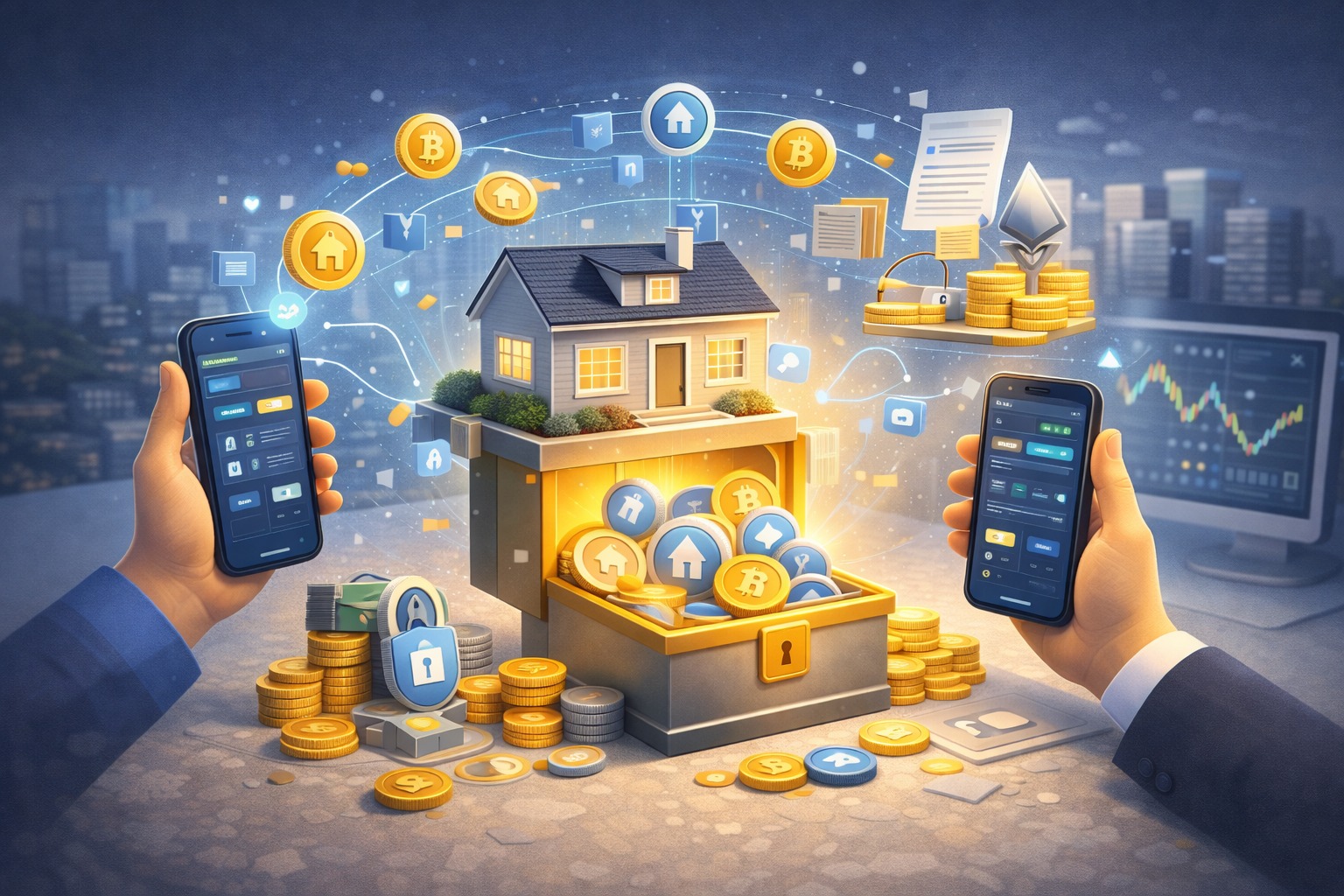

Today, we’re taking a look at how tokenization is transforming real estate by enabling rental income and ownership rights to be shared, automated, and traded among many investors. We examine how digital tokens and smart contracts make income distribution more transparent, efficient, and accessible, while also introducing the possibility of trading exposure to rental cash flows on secondary markets. At the same time, we highlight the importance of understanding asset fundamentals, legal structures, and realistic expectations around liquidity, emphasizing that tokenization enhances how real estate is accessed and managed but does not eliminate underlying risks. Together, these developments position tokenized rental income as a bridge between traditional property markets and modern digital finance, creating new opportunities for diversification, flexibility, and global participation.
How Does Tokenization Facilitate Income Being Shared Among Many Investors?
Rental income distribution through tokenization begins with structuring a real estate asset so that its economic rights can be represented digitally. When a property is tokenized, ownership or revenue participation is divided into digital tokens that reflect each investor’s share of the asset. These tokens act as a transparent record of who is entitled to a portion of the income generated by the property, such as rent or lease payments. Instead of relying on manual tracking or periodic reconciliation, ownership percentages are clearly defined and updated in real time, ensuring that income distribution aligns accurately with each investor’s stake.
Smart contracts play a central role in automating this process. Once rental income is collected, whether through traditional banking channels or digital payment systems, the funds can be transferred to a treasury or distribution wallet linked to the tokenized asset. The smart contract then automatically calculates each holder’s share based on the number of tokens they own. This removes the need for intermediaries to manually allocate funds and reduces the potential for delays, errors, or disputes. Payments can be executed according to predefined schedules, such as monthly or quarterly, ensuring consistency and predictability for investors.
Tokenization also enables greater transparency and auditability in income distribution. Because transactions and ownership records are recorded on a secure ledger, investors can verify when funds were received and how distributions were calculated. This level of visibility helps build trust, particularly in markets where traditional real estate reporting can be opaque or infrequent. Investors gain clearer insight into property performance, occupancy, and cash flow, allowing them to make more informed decisions while reducing reliance on centralized reporting structures.
Tokenized rental income can support more flexible and global participation. Investors from different regions can receive their distributions efficiently, subject to regulatory compliance, without the complexity of cross-border banking or currency conversion delays. Over time, programmable distribution systems may also support reinvestment options, automated tax reporting, and customized payout structures tailored to different investor needs. By combining automation, transparency, and accessibility, tokenization transforms rental income from a manual and localized process into a scalable, digitally coordinated system aligned with modern financial infrastructure.
Can Tokenized Rental Income Be Traded On Secondary Markets?
The tokenization of real estate introduces a new possibility: trading exposure to rental income itself rather than only the underlying property. In traditional markets, investors typically gain rental income by owning an entire property or participating in large, illiquid structures such as funds or partnerships. With tokenization, the right to receive future rental income can be represented digitally and divided into smaller, tradable units. This means investors can buy or sell access to cash flows without needing to transfer full ownership of the asset, creating a more flexible and dynamic approach to income-generating real estate.
This model allows rental income streams to become liquid financial instruments. Instead of waiting years for appreciation or committing to long holding periods, investors can adjust their exposure based on changing needs, risk tolerance, or market conditions. For example, an investor seeking stable income could acquire tokens tied to rental payments, while another could sell part of their income rights to free up capital for new opportunities. This introduces a new layer of portfolio management, where income, not just property value, becomes a tradable asset class.
The ability to trade tokenized rental income also improves price discovery and market efficiency. In traditional real estate, income streams are often valued through infrequent appraisals or private negotiations. Digital markets allow continuous trading, enabling real-time valuation based on supply, demand, interest rates, and property performance. This creates more transparent and responsive markets, where rental yields can be evaluated dynamically rather than through static reports. Over time, this could support the development of new benchmarks, indices, and financial products linked to real estate income.
Looking ahead, the trading of tokenized rental income could reshape how real estate fits into global capital markets. Institutional investors, pension funds, and individuals may gain easier access to diversified, income-focused portfolios across geographies. Developers could raise capital by offering future income rights, while investors gain exposure to stable cash flows without direct property management. As infrastructure and regulation evolve, tokenized rental income has the potential to bridge the gap between traditional real estate and modern financial markets, turning real estate income into a more accessible, liquid, and programmable asset class.
What Do Investors Need To Know About Tokenized Real Estate and Rental Income?
Investors considering tokenized real estate and rental income should first understand that tokenization changes how ownership and access are structured, but it does not change the underlying fundamentals of the asset. The value of a tokenized property or income stream still depends on factors such as location, tenant quality, lease structure, operating costs, and broader market conditions. Tokenization makes real estate more accessible and flexible, but investors must still evaluate asset quality, risk, and long-term performance just as they would in traditional property markets. A digital representation does not remove the need for careful due diligence.
Another important consideration is legal structure and regulatory clarity. Tokenized real estate relies on a clear connection between on-chain records and real-world legal rights. Investors should understand what their tokens represent, whether direct ownership, economic rights, or revenue participation, and how those rights are enforced. Platforms operating in regulated environments, such as those aligned with clear digital asset frameworks, help ensure that ownership, compliance, and investor protections are properly defined. This legal foundation is critical, because without it, tokenization may improve efficiency but cannot guarantee enforceability.
Liquidity is often presented as a major advantage of tokenized real estate, but investors should recognize that liquidity depends on market participation, infrastructure, and demand. While fractional ownership and digital trading can make real estate easier to buy and sell, active secondary markets take time to develop. Not all tokenized assets will trade frequently, especially in early stages. Investors should view tokenized real estate as a long-term asset that may offer improved flexibility, rather than assuming immediate or constant liquidity.
Investors should understand how rental income distribution works and how it fits into their broader portfolio strategy. Tokenized systems can automate income payments, improve transparency, and enable diversification across multiple properties and regions. This can provide exposure to stable, income-generating assets without the operational burden of property management. However, income may vary depending on occupancy, expenses, and economic conditions. By combining an understanding of traditional real estate fundamentals with the benefits of digital infrastructure, investors can better evaluate opportunities and risks in tokenized real estate and rental income markets as they continue to evolve.