
Fractional Ownership Explained Simply
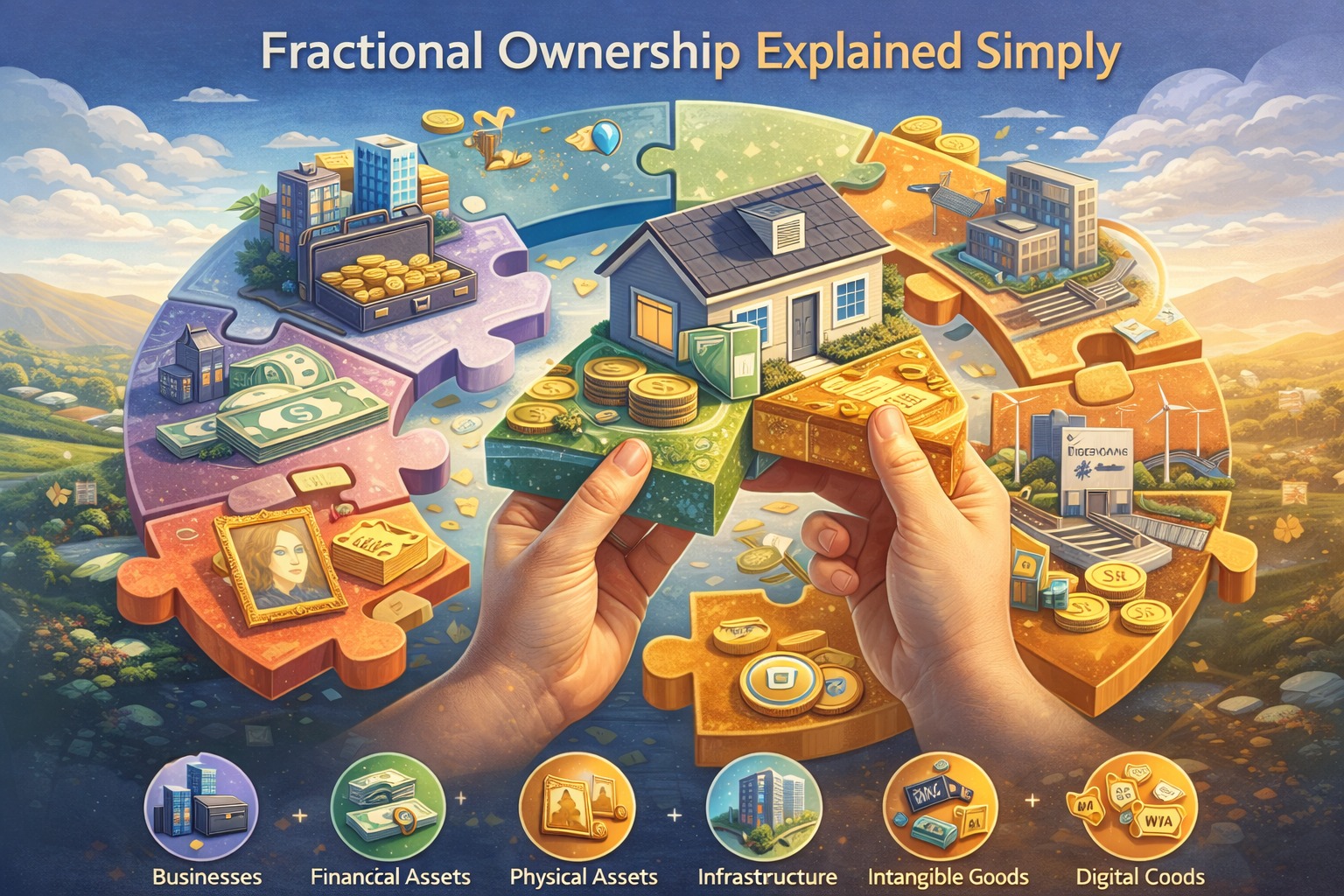

We’re taking a deep dive into Fractional ownership! Join us as we examine the benefits of fractional ownership as a simple idea with powerful implications: instead of owning an entire asset alone, people can own clearly defined portions and share in its value, income, and growth. It highlights how fractional ownership lowers costs, increases flexibility, and expands access to investing, especially when combined with modern digital tools like blockchain and tokenization. By showing how a wide range of assets, from real estate and businesses to art, infrastructure, and digital rights, can be owned fractionally, the article positions fractional ownership as a more inclusive, transparent, and scalable model for participation in today’s economy.
What Is Fractional Ownership?
Fractional ownership means owning a small piece of something instead of the whole thing. Rather than buying an entire house, building, or expensive asset by yourself, you share ownership with other people. Each person owns a fraction, or portion, of the asset, and that ownership is clearly defined. This makes it possible for many people to participate in owning valuable assets that would otherwise be out of reach.
A simple way to think about fractional ownership is like slicing a pizza. Instead of one person buying the entire pizza, each person buys a slice. Everyone still gets to enjoy the pizza, but no one has to pay for the whole thing. In the same way, fractional ownership lets people buy a “slice” of an asset and benefit from its value without needing to afford the entire asset.
Fractional ownership has existed for a long time. Timeshares, partnerships, and company shares are all early forms of fractional ownership. When you own stock in a company, you own a small piece of that business. The difference today is that technology allows fractional ownership to be more precise, flexible, and accessible than ever before.
In real estate, fractional ownership means people can own a portion of a property instead of buying the whole building or home. Each owner’s share represents a percentage of the property’s value and potential income. If the property earns rent or increases in value, owners benefit based on the size of their fraction. This opens real estate investing to people who don’t have enough capital to buy property on their own.
Why Is Fractional Ownership Beneficial?
One major benefit of fractional ownership is affordability. Instead of needing hundreds of thousands of dollars, someone can invest a much smaller amount. This lowers barriers to entry and allows more people to start investing earlier. It also lets investors spread their money across multiple assets instead of putting everything into a single purchase.
Fractional ownership also improves flexibility. Because ownership is divided into smaller pieces, it’s easier to buy or sell a portion than an entire asset. This can make it simpler to adjust investments, exit positions, or rebalance a portfolio. In some systems, fractional shares can be traded more quickly than traditional assets.
Modern fractional ownership often uses decentralized digital systems like blockchains and digital assets to track who owns what. Technology ensures that ownership percentages are recorded accurately and transparently. In some cases, blockchain technology is used to create tamper-resistant records that anyone can verify. This helps build trust and reduces confusion about ownership rights.
Essentially, fractional ownership is about sharing access and opportunity. It allows people to participate in ownership, investment, and value creation without needing large amounts of capital. By breaking assets into smaller, manageable pieces, fractional ownership makes investing simpler, more inclusive, and better suited to today’s digital world.
What Kind Of Assets Can Be Owned Fractionally?
Fractional ownership can apply to many different kinds of assets, especially those that are valuable, durable, or capable of producing income. The most common example is real estate, where homes, apartment buildings, commercial properties, or land can be divided into shares so multiple people can own portions of the same property. Each owner benefits based on their fraction, whether through rental income, appreciation, or both, without needing to purchase the entire property outright.
Businesses
Businesses and companies are another familiar example. Stocks and shares represent fractional ownership of a company, giving investors a claim on future profits and value growth. This model has existed for centuries and shows how fractional ownership can scale investment, allowing millions of people to collectively own and fund large enterprises.
Financial Assets
Financial assets such as bonds, funds, and structured investment products can also be owned fractionally. Investors may own portions of loan portfolios, revenue streams, or investment vehicles that pool capital and distribute returns proportionally. Fractionalization makes these assets more accessible and allows investors to diversify across multiple instruments rather than committing large sums to a single one.
Physical Assets
Physical assets like art, collectibles, luxury goods, and commodities can also be fractionally owned. High-value artwork, rare collectibles, gold, or other scarce items can be divided into ownership shares, enabling people to invest in assets that would normally be unaffordable. This allows cultural and scarce assets to be shared while still preserving clear ownership rights.
Infrastructure and Development
Infrastructure and large projects are another important category. Roads, energy projects, data centers, and large-scale developments often require massive upfront capital. Fractional ownership allows many investors to collectively fund these projects and share in long-term returns generated by usage fees, energy production, or service revenues.
Intangible Goods
In the digital age, intellectual property and digital assets can also be owned fractionally. Music rights, film royalties, patents, software licenses, and digital collectibles can be divided into shares that represent rights to future income or usage. This enables creators to raise capital while allowing supporters and investors to participate directly in the success of creative and technological works.
Real World Assets (RWAs)
Modern technology has expanded fractional ownership into tokenized assets, where real-world or digital assets are represented as small digital units. Tokenization allows almost any asset with clear ownership rights to be divided, tracked, and transferred efficiently. This makes fractional ownership more flexible, transparent, and globally accessible than ever before.
In short, almost any asset that has value, can be defined legally, and can generate benefits over time can be owned fractionally. Fractional ownership turns large, exclusive assets into shared opportunities, making investment and ownership more inclusive across many parts of the economy.